Across cultures, systems and ministry contexts, leaders serving vulnerable children often share a quiet reality: the work can feel lonely.
Organizations carry heavy responsibility. Churches respond faithfully within their capacity. Government agencies navigate complex mandates. Many leaders assume they are the only ones addressing a particular need — or that collaboration will be difficult, slow or even impossible.
“Quite often I hear someone say, ‘We’re the only ones doing this in our city,’” said David Hennessey, director of CAFO Global Network. “But that’s almost never true.”
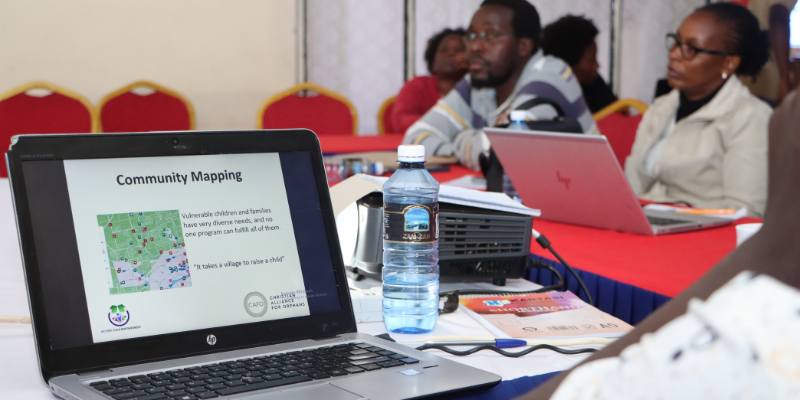
In 2025, leaders from several countries participated in a community mapping cohort hosted by the CAFO Global Network. Through a series of online gatherings and shared learning, participants explored how mapping services and relationships within a local community could reveal new opportunities for collaboration to strengthen care for vulnerable children and families.
Following the CAFO cohort, leaders returned to their communities and hosted community mapping events of their own — bringing together churches, organizations and local leaders to identify needs, map existing services and explore how they could work together more effectively.
What followed were not simply conversations, but tangible shifts in collaboration, trust and action.
“We saw tangible, meaningful shifts taking place in communities across the globe,” Hennessey shared. “It was so encouraging to see how bringing a diverse group of people together can lead to greater trust and impact for kids and families.”
The stories that follow highlight just a few of those early outcomes.
Kenya: How community mapping led to a unified policy and regional alliance
For Obed Masese and his team at Victory Child Empowerment in western Kenya, the early days of care reform work were exhausting.
His organization began working to transition children from institutional care back to families in 2020, but collaboration across the region was limited. Most organizations operated in separate sectors — health, education or child protection — with little connection between them, he said.
“We used to work alone,” Masese shared. “Everyone was operating in their own lane.”
Community mapping began to change that.

As leaders gathered in May 2025 to identify who was working where, participants quickly realized how little they knew about others serving in the same region.
“You mean you are in this region, and I don’t know you?” Masese recalled participants asking one another during the early mapping conversations.
What began with a small group of seven leaders soon expanded. When the team planned a larger gathering to continue the conversation, another organization unexpectedly offered financial support to help bring partners together. The event grew to more than 70 participants representing churches, nonprofits, universities and government agencies.
For many leaders, it was the first time they had seen the full picture of who was serving vulnerable children and families in the region, Masese said.
The connections grew into a regional alliance. Now they now meet regularly to share information and coordinate responses to cases involving vulnerable children and families in the area.
Masese said the collaboration has also influenced broader change in his region. Insights from the alliance helped inform the development of a county child protection policy — a critical step toward ensuring future resources and services for children and families in the region. At the same time, the strengthened coordination among partners has had tangible results. Through these relationships, dozens of children have already been reunified with their families.
For Masese, the impact has also been deeply practical for the leaders in the organizations themselves.
“We have reduced fatigue and burnout,” he explained. “Now we handle what we can do best, and other partners support the rest.”
Zimbabwe: A university partnership expands community mapping
Before community mapping, collaboration in Rephat Nyarenda’s community in Zimbabwe was rare. Many organizations worked quietly within their own spaces, hesitant to share information about their work. Some even feared that transparency might threaten funding or relationships.
“People viewed collaboration as competition,” Nyarenda explained. “They didn’t want to disclose what they were doing in the community.”
The mapping process began to shift that mindset. After participating in the CAFO Global Network community mapping cohort in 2025, Nyarenda and his team at Zimbabwe Without Orphans began mapping services in their region to better understand who was serving vulnerable children and families.

One unexpected partnership emerged with the University of Zimbabwe. Students from the university’s Child Welfare Studies program joined the effort, helping identify organizations and services across the community through on-the-ground outreach. As students gathered information and mapped services, leaders began discovering organizations serving children and families that had never been connected before. Some had expertise and networks that others did not, revealing new opportunities for collaboration, he said.
“I realized in this process it’s not everything I know,” Nyarenda shared. “There are people who know things I don’t know, and together we can reach people we could not reach alone.”
The students’ involvement strengthened the process in two ways, he added. Community leaders gained a clearer picture of available services, and students gained firsthand insight into the realities facing vulnerable children and families. For many of the students, the community mapping experience became a practical tool they will carry into their future work in social welfare and child protection.
Nyarenda said the experience reinforced a deeper lesson about the work of caring for vulnerable children and families.
“In orphan care, there is no such thing as a lone ranger,” he shared. “We need each other. When we stand together, we are stronger and we can support more children and families.”
Nigeria: From identifying a gap in female reproductive health to filling it together

In Bossa, Nigeria, leaders participating in the 2025 CAFO Global Network community mapping cohort uncovered a significant gap: vulnerable women and families had limited access to female reproductive health services. Local leaders had long sensed the need, but the right partners had never gathered together to address it.
Elizabeth Mark, alternative care manager with Back-to-Back Ministries Nigeria, helped coordinate the mapping event that brought together representatives from churches, local organizations and community leadership. As participants began mapping services and identifying where support was missing, a clearer picture began to emerge.
“We realized that the services actually existed, but many women couldn’t access them because transportation was a barrier,” Mark explained. What initially appeared to be a complex systemic problem soon became something the group could address together.
During the one-day mapping event, participants moved from discussion to action. Before the gathering ended, leaders had formed a small committee, identified local leadership to guide the effort and began coordinating a practical solution to help women reach the services already available.
For Mark, the experience revealed how powerful collaboration can be when the right people are in the room together.
“When we brought everyone together, we could finally see what each person was already doing,” she said. “And that helped us realize how we could work together to support families better.”
Moldova: Collaboration where trust once felt impossible
In Moldova, the impact of community mapping extended beyond identifying services and helped open the door for collaboration between groups that had rarely worked together before, said Alina Druta, executive director of ACMO.
Historically, relationships between government agencies and faith-based organizations in post-Soviet countries had been marked by deep mistrust, she said. Collaboration across sectors was rare, and meaningful partnerships between Christian organizations and government institutions were often considered unlikely.
“For a long time, I felt like I was the only one doing this work,” Druta shared. “I knew there were other Christian organizations, but families were not served well and children were falling through the cracks of the system.”
After participating in the 2025 CAFO Global Network community mapping cohort, Druta helped coordinate a gathering in Chisinau to map services for vulnerable children and families and bring together leaders from across sectors. As organizations began identifying who was already serving in the community, conversations shifted.
“We started to dig more and ask, ‘What can other people bring to the table so that we can have a bigger and greater impact?’” Druta said.
The results soon extended far beyond the event itself. One government official overseeing child welfare in Moldova invited a Christian network to train government social workers across the entire country in trauma-informed care — a partnership that would have been difficult to imagine even a decade earlier, Druta said.
Yet through community mapping, relationships began to form and new pathways for collaboration emerged. For Druta, the experience revealed an important lesson about the work of caring for vulnerable children.
“Sometimes we are so focused on what we are planting,” she reflected,” but we should also care who is side by side with us in the process.”
When leaders begin to see one another as partners
Community mapping does not solve every challenge in a community, but it can create an environment where leaders come together with greater clarity and shared ownership of what is possible for children and families where they live.
Hennessey said he has seen the ripple effect as community mapping spreads and helps build relationships across networks and regions.
“I hope leaders can see what could potentially happen in their community when they engage in community mapping,” he said. “I hope they can see the real benefits of working together — and how children can remain in families, be reunited with families and how families can be sustained when churches, NGOs and even government agencies work together.”
——-
Interested in learning more about community mapping?

If you would like to further explore how community mapping could strengthen collaboration in your own community, register for the Healthy Partnerships in Global Child Welfare course in CAFO Academy, part of the Core Elements program. This course offers practical guidance for building strong partnerships and mapping services so children and families can receive the support they need. Available in both English and Spanish.