If you hang around the American foster care space long enough, you’ll hear the familiar refrains:
“The foster care system is broken.” “There’s a foster care crisis.” “Foster care needs to be reformed.”
Despite its crucially important work and good intentions, the foster care system faces numerous problems that negatively affect the well-being of children and families. But it doesn't have to stay this way.
Learn more about the primary challenges in foster care—and the path forward to overcoming them.

The State of Foster Care
The goal of foster care is to maintain the safety and well-being of our children in our communities. In situations where children cannot safely stay with their biological families or guardians, the foster care system’s first goal is to protect children by placing children in safe, stable homes and helping their biological families get the help they need to be reunited as a family. When safe, timely reunification isn’t possible, the child welfare system helps place children in long-term, permanent homes with extended family members or adoptive families. But too often, biological families don’t get the support they need, and children spend years waiting for permanency with safe, stable families.
Statistics show that the foster care system is overwhelmed.
The Adoption and Foster Care Analysis and Reporting System (AFCARS) within Health and Human Services estimates there are 331,747 children in the child welfare system in their most recent report on fiscal year 2025. However, the good news is that the number of children where you live is much less overwhelming. Find your county foster care data in the More Than Enough dashboard.
And while foster care should be a short-term solution while waiting for family reunification, it can often lead to years of placement changes for children unable to return home safely. In 2025, 20% of children exiting foster care had spent three or more years in the system.
Looking for more statistics showing data and trends in US foster care? Check out the full US Foster Care Statistics page for a deep-dive into recent data.
The Foster Care System Has Inadequate Funding and Resources.
Foster care funding is cumbersome and complex.
The child welfare system is funded through a patchwork of federal, state, and local funding streams, and many of these different streams have different requirements and designated purposes. Additional funding often comes with prerequisites that limit the number of communities that can benefit from it. This makes executing child welfare programs on the frontlines logistically cumbersome.
Caseworkers are under-resourced and overwhelmed.
Underfunding translates into high caseloads for social workers. In general, research shows that a target of 12-18 cases per social worker is ideal (though standards vary based on the types and complexity of cases). While recent national data is limited, some research shows that caseworkers carry between 24-31 cases on average.
Inadequate resources mean caseworkers struggle to serve children and families in foster care effectively.
When social workers are managing large caseloads, their ability to get birth parents the help they need to move them toward reunification suffers, as does their ability to help children reach timely permanency through adoption (when reunification isn’t possible). As a result, children spend more time in foster care. High caseloads also mean that social workers cannot be as responsive to questions and needs of foster and kinship families. Coupled with overwhelmed family courts that often move slowly, this backlog leaves temporary caregivers without the information and guidance they need to support children in their care effectively.
And these high caseloads translate into high rates of caseworker burnout and a historical turnover rate of between 20-40% per year. When social workers turn over, children are likely to spend more time in foster care and are less likely to achieve permanent family care.
There is a path forward. Both federal government and state government policies influence how many and what type of resources local child welfare agencies receive. While you can advocate for your elected officials to strategically provide sufficient federal and state funds to child welfare services and support caseworkers, your community has the most influence right where you live. You can help fill these gaps before, during, and beyond foster care at the grassroots level, creating greater community engagement in the system and leveraging your existing local resources to get better outcomes for children and families. This includes supporting and caring for social workers—in addition to caring for children and families themselves.

Children Lack Stability in Foster Care and Have to Wait Too Long for Permanency.
Children and young people’s sense of self and relational, emotional, and mental health suffer when their time in foster care is prolonged.
Foster youth experience trauma when they are removed from their biological families-–in addition to trauma from the factors like neglect or child abuse that led to them entering care to begin with. Experiencing multiple placements, being moved out of their home school district to a new school, or being separated from their siblings only heighten this trauma. All of this has very real effects on children in care, contributing to behaviors or patterns of coping that can further harm their relational, emotional, and mental health. It also negatively impacts vocational and educational success. But children can build resilience and move towards healing from these factors through approaches outlined both by Scripture and science, and it’s important not to reduce their identities to the hard things they have experienced.
Youth who age out of foster care without reaching permanency with family face negative outcomes.
Some youth exiting foster care are reunited with their biological families or are adopted into new, permanent families. But in 2025, 9% of foster youth exiting foster care aged out without experiencing permanency. These former foster youth are vulnerable to human trafficking and homelessness and often struggle to maintain employment or healthy social relationships.
Biological Families Often Lack the Support They Need to Prevent Separation or to Reunify.
Biological parents are not getting the resources they need to prevent separation.
In the past few years, there has been an increased policy emphasis on providing family services before foster care is necessary and an increased awareness in foster care advocacy spaces about the need to support biological families. This is crucial, as neglect was the top reason children were removed from their homes in 2025, accounting for 55% of placement cases. Neglect is often linked to poverty, and other forms of child maltreatment, including substance abuse or physical and sexual abuse are less common drivers of children entering foster care.
Emphasizing family preservation can prevent kids from entering foster care. When our communities address the root causes of family separation, identify potential red flags to keep families together, and provide intensive services for families on the brink of having their children removed, we’re preventing the trauma of children entering care.
However, many biological families are not connected to support services and resources far enough in advance of a crisis to keep families together, or these services don’t have the resources to support the volume of vulnerable families in their communities.
Biological parents are not getting the resources they need to maintain relationships with their children and reunify.
Similarly, reunification rates suffer when biological families are unable to get the practical, relational, and emotional support they need to take the necessary steps to reunify with their children. This type of support is exactly what our communities—especially churches—are uniquely equipped to provide.
Beyond a lack of support, there are also systemic factors, such as charging biological families financial fees for the time their children are in foster care, that prevent or delay reunification. And when a systemic shortage of foster families means children are placed far outside of their home communities, it’s difficult for biological parents to participate in family visits to maintain relational ties with their children while on the path to reunification.
Kinship family identification rates are improving, but kinship family members need greater support.
If parents cannot provide safety and care for their children, it’s best for children to stay with kin wherever safely possible. Sometimes, relatives take informal custody of children before social services gets involved. Other times, caseworkers will find relatives to care for children who have been separated from their primary caregivers.
From 2007 to 2021, the portion of children formally entering foster care placed with kin increased by nearly 10%. However, oftentimes kinship caregivers are not eligible for the same benefits that formal, liscensed foster families can access. While recent policy changes aim to address this gap, implementing the policies in a way that prioritizes kinship placements wherever possible while maintaining rigorous safety standards is an ongoing process.
Biological family support is seen as in opposition to foster care and adoption—and vice-versa.
Community investment in family preservation and community investment in foster care and adoption are often treated as either/or propositions, instead of both/and propositions.
Children and families need support before and during and beyond foster care. Even as communities rightfully invest in family preservation, there will be children who need safe foster homes for a season. And there will be children who need adoptive families when reunification is impossible.
Pitting these different elements of holistic child welfare against each other as a zero-sum game leads to competition and hostility—undermining the collaborative care that will help children and families thrive.

Foster parents lack the support or resources they need.
Foster families lack the specialized support and training to care for children who have experienced trauma.
Caring for children who have experienced the trauma of entering foster care—and who have experienced the neglect, poverty, or child abuse that led to separation to begin with—requires significant energy and unique training. Many parents need ongoing support and training to guide children through challenging behaviors. Sometimes foster parents are also unaware of many daily, foundational habits that can help foster children adjust and stabilize in their homes.
There is a shortage of specialized professional and therapeutic services for children in foster care.
While parents need specialized training for foster parenting, there are also professional services that most children in foster care need outside the home. For example, therapy and mental health services that specialize in childhood trauma, child care providers that are trauma-informed, dentists and doctors who accept Medicaid, and lawyers who specialize in child welfare law are often rare—particularly in rural communities. As a result, foster parents might spend hours driving children from appointment to appointment, or children may have to wait too long for the care they need. In addition, in specialized cases, children may need access to residential treatment centers for a season, which are often over capacity.
Foster parents burn out, leading to low retention rates and increased strain on the foster care system.
All of these challenges add up for foster parents. And because child welfare staff are often overworked and burned out, too, social workers can be unresponsive to questions or needs from foster parents, contributing to frustration and exhaustion.
As a result, about 30-50% of foster families decide to quit fostering each year. This means foster children often have to move from one family to another, increasing the instability and trauma they experience. It also means child welfare agencies have to constantly recruit more families just to break even with the number of families they had the previous year—let alone recruit enough families to actually care for the number of children who need temporary homes.
Even in the face of systemic challenges, one of the best ways to address this burnout is by harnessing broad community engagement to support families during the foster care journey using proven models and approaches.
The Process of Adopting Children from Foster Care Is Challenging.
In cases where parental rights have been terminated, foster children are waiting too long to be adopted.
The first goal of foster care is reunification with safe biological family. When that is not possible, parental rights are terminated, and children need permanent, loving homes via adoption. In cases eligible for adoption, children have to wait an average of three years to be adopted and reach the stability of permanency with a new adoptive family. Part of this delay is due to the complexity of adoption procedures and the reality that caseworkers are stretched too thin. But part of this delay is due to a shortage of adoptive families. In particular, there is a shortage of adoptive families for teens, sibling groups, and children with complex medical needs, as families tend to volunteer to adopt younger children in higher numbers.
As a result, in some cases older foster youth who could thrive in a family are placed in group homes. While these institutional settings can be helpful to some youth, they generally do not support the same positive outcomes as foster homes.
Some adoptees need increased support to navigate the impact of adoption on identity and belonging.
While the goal of adoption is to provide permanent stability, safety, and love, it is still rooted in the experience of a child not being able to stay in their biological family. And that loss does not end the day they are adopted. Each adoptee’s experience is unique, and there is no singular story of how adoption affects children’s sense of identity and belonging. While many adoptees do struggle to varying degrees, research shows that outcomes for adoptees are often positive. It’s important for communities and families to understand the diversity of experiences in adoption and meet adoptees where they are in the complexity of their stories.

Communities struggle to get engaged in foster care and allocate resources effectively.
Existing community resources and programs aren’t integrated into the child welfare system.
Communities are full of churches, nonprofits, and ministries that are passionate about caring for vulnerable children and families. Every time a father finds stability in a substance abuse support group, a mom accesses mental health care while struggling with postpartum depression, a foster family receives meals from a local church, or a grandparent who has adopted their grandkids gets help with an electric bill, those are community resources meeting pressing needs for current or potential child welfare cases.
But many of these existing resources aren’t directly connected to the child welfare system to effectively serve children and families in foster care. Community assets—from food pantries to church mercy ministries to community health clinics—need to be connected to child welfare system and one another to leverage their programs on behalf of children and families in foster care.
In terms of tangible needs, there are technology platforms like Care Portal that can help connect the needs of individual children and families to people in the community who can meet them.
Lack of effective training makes collaboration difficult.
Solving the broader challenge of coordinating and integrating stakeholders’ work across the community requires strategic collaboration. Too often, collaboration stalls because everyone is too busy, or stakeholders duplicate efforts because communication breaks down.
The good news is there are principles to structuring collaboration that can help communities work together in healthy ways, and even specific trainings focused on collaboration in the foster care system.
Competition gets in the way of fixing foster care system problems.
Rather than coordinating and collaborating in the child welfare space, sometimes organizations, agencies, or ministries start competing with one another for funding, resources, and partnerships across their communities. When community stakeholders operate in this self-protective mode, children and families suffer. Community leaders and stakeholders need a foundation of relational trust in order to engage in long-term collaboration.
Many churches are not engaged in foster care—or are looking for more resources to help their congregations effectively care for children and families.
Churches should be on the front lines of foster care and adoption. And many congregations and individuals are. People for whom religion plays a major role in life are nearly 50% more likely than those with minimal religious commitments to be familiar with the child welfare system.
However, the many needs and challenges in foster care show that our communities need even more churches to embody the “pure religion” invited by James 1:27 and throughout Scripture.
For most churches, the issue is not that they don’t care about serving the vulnerable and making an impact. The issue is they often don't know how. They need to understand the gospel and the child welfare system, so they have a holistic foundation from which to live out their calling to care for vulnerable children and families while growing closer to Jesus as His disciples. And they need to understand the complexity of welcoming and walking alongside children or biological families with a history of trauma, and need to be equipped to support foster and adoptive families.
The Pure Religion Project at CAFO creates resources designed to meet this crucial need through world-class resources, supportive community, and ongoing connection and coaching.
The foster care system wrestles with ethnic and racial disparities.
Historically, children of color have been disproportionately represented in the child welfare system. According to a 2011 study, 1 in 17 kids enter foster care. But for Black children, the placement rate increases to 1 in 9, and 1 in 7 for Native American children. Child Trends found that “American Indian and Alaska Native (AIAN) children are overrepresented in foster care in nearly every state when comparing their percentages in the foster care and total child populations.”
These disparities often track closely with elevated rates of child poverty, substance abuse and neglect that are driving factors for family separation. Finding ways to reduce these disparities – including both child removals and the underlying risks to children – is of immense importance.

Where Do We Go From Here?
The foster care system is indeed flawed and broken in many ways—from inadequate resourcing to ineffective community engagement to insufficient support for biological and foster parents. There are so many “not enoughs”: not enough families, not enough resources, not enough support.
And as a result, the foster care system does sometimes contribute to long-term pain for children and families. Some families that could have stayed together with the right support end up being separated. Too many children have to wait years for permanency, whether through reunification or adoption. Many foster parents burn out, leading to more instability and loss for children.
We must acknowledge these challenges of foster care and support accountability measures within it without dismissing the necessary work of the child welfare system and the individuals seeking to carry out this work. This same system protects children every day and creates environments where hurting and broken adults can get help for addictions and access to resources they’ve never had before.
And in every one of these challenges, the solution includes churches, organizations, and advocates getting more engaged in the foster care system, not running away from it.
Local and state officials, social workers, organizational leaders, churches, and other professionals can come together to identify and fill the gaps that will make the biggest difference for children and families in foster care—rather than pointing at the gaps to blame one another. And when this happens, communities can start moving from not enough to more than enough for children and families before, during, and beyond foster care.
Here are a few resources to help you and your community get started:
The More Than Enough Podcast
Hear from people like you across the US about how they are putting the pieces together, and discover ideas and tools that will help you along the way.
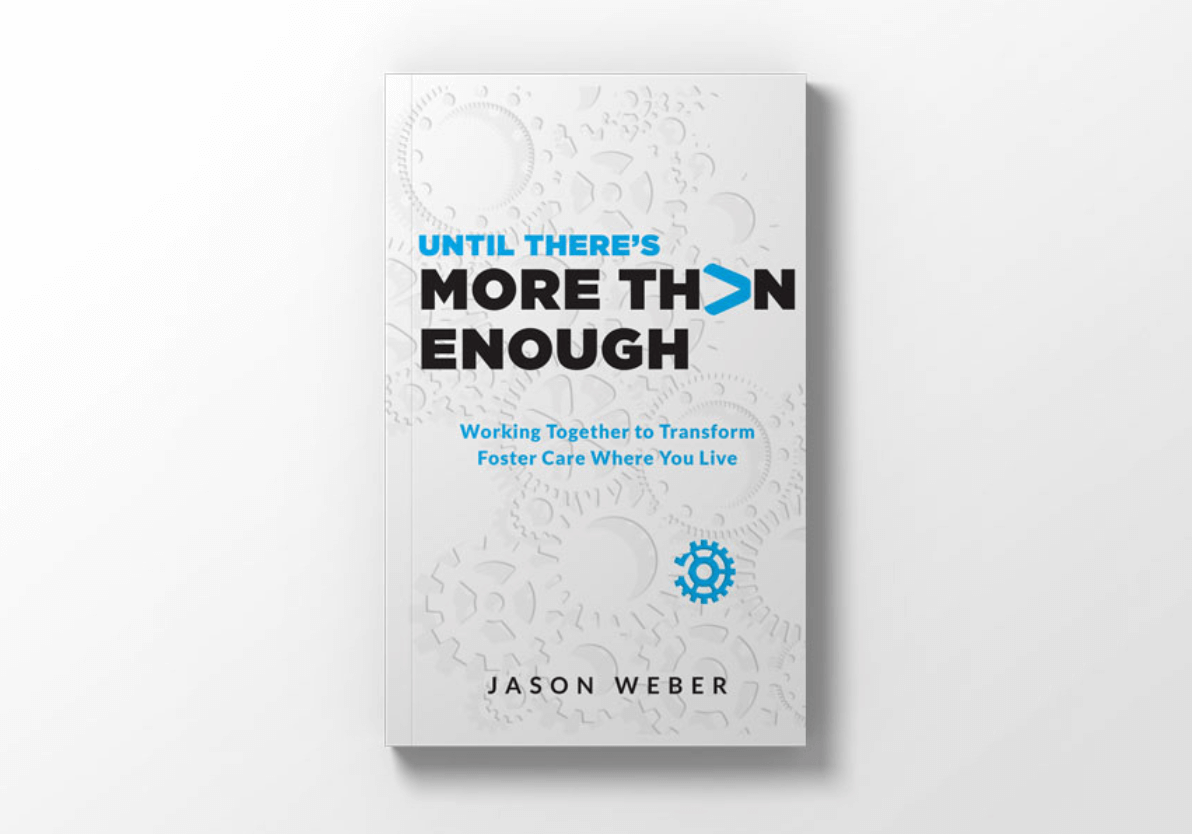
Until There's More Than Enough
Explore principles and practices that will help advocates, churches, and organizations in your community work together to provide more than enough.

More Than Enough Essentials
Join a one-week online course designed to help you and other foster care leaders work together to fill the biggest gaps in caring for children and families.