Like many communities across the US, West Virginia knows a thing or two about trying to care for vulnerable children and families with what feels like not enough resources, not enough support and not enough families.
But over the past several years, leaders and advocates across West Virginia have been coming together to imagine how foster care could look different in their communities.
“We’re clear-eyed about the challenges we face here in West Virginia,” said Greg Clutter, Director of Chestnut Mountain Village and one of the early participants in this collaboration.
West Virginia has more children per capita in foster care than any other state, with 19.4 out of every 1,000 children in foster care. Driven partially by the opioid crisis, many children (whether officially in foster care or not) are living with grandparents or aunts and uncles in kinship care placements. And too often, these kinship families do not have access to the financial or relational support needed to care for the children unexpectedly in their homes.
“But we’re also clear-eyed about the massive potential in our communities — we’re close-knit with so many churches, ministries, families and advocates who want to love their neighbors well, and who have the resources to help do it,” Clutter said.
It’s just a matter of getting unstuck.
Building momentum — together
After years of building trust and connection, Clutter and a group of other foster care leaders and advocates wanted to launch a coordinated, strategic effort to leverage everyone’s unique gifts and strengths to tackle shared priorities.
As Clutter put it, “We’ve been trying the same thing for decades, but we believe that the solution is collaboration. We believe that there’s enough resources in about every community in the entire state of West Virginia to be brought to bear on this issue so that there’s more than enough for kids and families.”
“Unstuck” Fairmont and Charleston

So in November, CAFO’s More Than Enough support team facilitated “Unstuck: Transforming Foster Care Where You Live” events in Fairmont and Charleston, West Virginia.
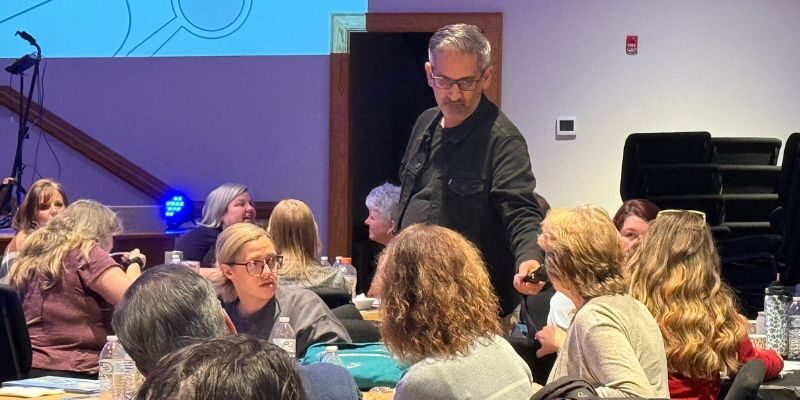
Unstuck is a live, one-day workshop designed to help communities work together to create greater community involvement, build stronger relationships and get better results for children and families.
Far more than an awareness or mobilization event, Unstuck equips attendees with practices of effective collaboration. And it helps them identify next steps to strategically work together to fill the gaps that will make the biggest difference in caring for children and families in foster care.
Melissa Cargill, North Central WV Community Coordinator for Chestnut Mountain Village, said the events “gave us an opportunity to gather churches, agencies and other child welfare professionals and organizations around quality content that will help us all to build stronger relationships and unite around a shared vision for what more than enough could look like for children and families in West Virginia. We are optimistic that these workshops will be a catalyst for deeper relationships and effective collaboration in the future for those counties who were able to attend.”
The power of relationships
This relational emphasis is foundational to Unstuck. Alongside information and practical guidance, Unstuck provides a space for attendees to acknowledge the ups and downs of the world of foster care — and embrace the importance of trust as the foundation for getting things done.
Autumn Culvyhouse, an attendee from the licensing agency OVP Family, found Unstuck both challenging and refreshing.
Jason Weber, National Director of More Than Enough and the trainer and facilitator for the Unstuck events, was struck by the shared passion in a room of people with varied backgrounds.
“It was a joy to see West Virginians from different career paths and with different levels of foster care experience roll up their sleeves and begin the vital work of making a bigger difference for children and families together,” Weber said.

Locally driven — and nationally informed
The More Than Enough support team has now hosted these Unstuck events in West Virginia and Michigan.
“This isn’t a cookie-cutter approach,” shared Weber. “Every community is unique, and local leaders and advocates are at the helm of any effective foster care collaboration. Through Unstuck, we just have the privilege of helping them identify what they have, what the biggest gaps and strengths are in their communities, and how to move forward — together — in the ways that will matter most for children and families.”
Simultaneously, the More Than Enough support team sees its role as lightening the load on communities by sharing insights from other collaborations that are further down the road.
“We hope we can serve these communities and accelerate their work by connecting them to what’s working in other places,” explained Rachel Jackson, community impact strategist on the More Than Enough support team. “We aim to provide real-world guidance that can keep local leaders from relying solely on trial and error or from reinventing the wheel — while always helping them customize tools or models for their specific contexts.”
Moving forward
The More Than Enough support team will continue to offer learning and connection opportunities to help local collaborations in West Virginia build momentum, with additional events planned in other states in 2026.
“Our hope and prayer is that communities in West Virginia and beyond will take hold of the foster care crisis together and support children and families where they live in ways that simply aren’t possible alone,” Weber said.
Unstuck is just one part of that ongoing journey of seeing vulnerable children and families thrive — and the people of God overflowing with the love of God are helping lead the way.
As one event attendee shared, “It was meaningful, relevant, engaging and inspiring! There was just something different about this … I just feel like the Lord is in it!”
—-

Want to get started where you live? Apply for the More Than Enough Fellowship, a funded launch cohort that will guide you and other collaborators in your US community through the earliest stages of working together to provide more than enoughfor children and families in foster care. Alongside matching funding to fuel your collaboration, you’ll find coaching and guidance to help kickstart your work together.